Tuesday, March 20, 2012

Claire Schurz, 3/13

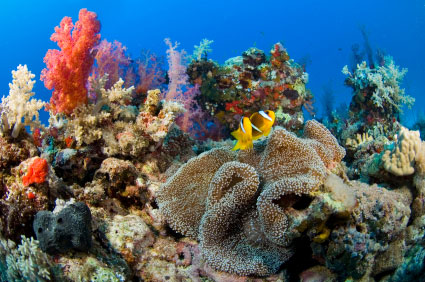
Title: Sea Urchins or Coral Reefs
Purpose: Examine the pros and cons of sea urchins on coral reefs and underscore the fragility of the food chain and the dangers of human activity on marine wildlife.  In this case, the human activity is both high carbon emissions and overfishing.
Discussion Questions:
Is it better to have no sea urchins at all?
How does this study demonstrate the fragility of the food chain?
What is the best solution to maintaining the coral reefs?
Follow up Research:
http://www.sciencedaily.com/releases/2011/01/110114164516.htm
http://a-z-animals.com/animals/sea-urchin/
http://celebrating200years.noaa.gov/foundations/coral/side.html
Picture:
 

Links:
http://www.sciencedaily.com/releases/2012/02/120227132835.htm


http://celebrating200years.noaa.gov/foundations/coral/side.html

Pre Landfill Blogpost

The Redwood landfill provides an environmentally sound disposal plant that can be accessed by many in the Bay Area. While this landfill only takes metals/appliances, construction and demolition debris, yard waste and municipal solid waste, it disposes of these items ecologically. The alternatives to landfills can be both good and bad, one can either throw their waste on the street etc. which will eventually harm the environment in one way or another by either killing an animal or dirtying water however on the other hand one can also recycle so as to reuse material. One can also burn their trash however this also harms the environment with dangerous CO2 gasses. However to prevent any harmful effects on the environment in the first place, prevent waste! Landfills are good because they can hold large amounts of waste however the negatives about them outweigh the positives by far. They cost alot of money, they release methane, horrible odor and ugly visual, and more. Incineration on the other hand can reduce the volume of waste while also reclaiming energy by burning however also creates large amounts of air pollutants and ash is generated, loss of potential recyclables and the facilities take a large investment to run. My thesis on an article about waste would be "The solution to waste disposal is to not have waste to dispose."

Sunday, March 11, 2012

Olivia Lloyd -- February 14

title: Drawing A Line On Coal For Mexico

purpose: The purpose of my presentation was to inform my peers of a recent example that demonstrates the dangers of coal mining. Dos Republicas, a Mexican-based coal company wants to blast about 10 square acres of land in the Eagle Pass, Texas, so they can mine for coal cheaply. I wanted to explain the detrimental health and environmental effects of coal mining. Hopefully, my presentation highlighted how important it is for us to pursue alternative energy sources. Dos Republicas is just one example of how a large company, with millions of dollars to spend on lawyers and permits, could be permitted to destroy residents' lives and ruin ecological systems permanently in Eagle Pass. The money and extra coal is not worth the long-term costs.

discussion questions: 
1) Do you think that coal mining in Eagle Pass is ok, if the company goes through all the legal obligations?
2) Since the area's residents are very poor, and face a wealthy, powerful coal company, how should their voices be represented?
3) If the coal company does start mining in Eagle Pass, should it provide compensation for the residents? If so, how would they compensate? Money? Habitat restoration?

follow up research:
-An article written by the Texas Tribune on the Eagle Pass Debate: http://www.texastribune.org/texas-environmental-news/environmental-problems-and-policies/border-battle-over-coal-mine-and-its-mexican-owner/
-A website that explains both the incentives of coal mining and it's negative impacts: http://www.visionofearth.org/featured-articles/coal-power-pollution-politics-and-profits/
-Here is a video of the public hearing about the company proposing to develop more coal mines in Eagle Pass: http://www.youtube.com/watch?v=tYYWEIFIs7w
-An interview with a resident of Eagle Pass who opposes the coal mine: http://www.youtube.com/watch?v=TKsCCWfLkuw&feature=related

picture:
The first picture shows a coal mining site. The natural environment has been completely destroyed, and the same thing would happen in Eagle Pass. The second photo is of a man working in a coal mine. It is a very dangerous, unhealthy and dirty job.


powerpoint:

see me...can't figure out how to upload it

original sources:
-from the New York Times: http://www.nytimes.com/2012/02/10/us/in-texas-border-town-drawing-a-line-on-coal-for-mexico.html?_r=1&pagewanted=all
-news segment from the Texas Tribune: http://www.youtube.com/watch?v=PCvuFrDcLDU
-health impacts of coal: http://www.youtube.com/watch?v=XKpAxfKh8-w&feature=related
-coal ash water contamination: http://earthjustice.org/news/press/2010/new-study-shows-coal-ash-water-contamination-much-worse-than-previous-estimates
-dangers of working in a coal mine: http://www.spike.com/articles/g1dc77/coal-the-potential-hazards-of-working-in-a-coal-mine
Marin Academy Soap Study

1. Tiffany Chang, presented March 8th, 2012


2. Purpose: To educate the MA population about the toxicity of our current pink soaps, and the pros and cons of Dr. Bronner's Soap. Also to ask for opinions on whether or not MA thinks it should change the soaps, and receive feedback on what Alec and I should fix or change for a presentation to Mickey Morris.


3. Discussion Questions:
-Is it the responsibility of a school to provide a safe and healthy environment? Why?
Does that responsibility apply to the physical environment, including hand soap?
-Why or why not do you think MA should change its hand soaps? Are you for the change, on the fence or not in support?
-Come up with three suggestions for the presentation that Alec and I will present to Mickey.

4. Other Links:


5. 
6. Resources


Wednesday, March 7, 2012

Test-Tube Hamburger


Maya Rhine, 2/23/2012
Title: Where’s the Beef?
This was about scientists in the Netherlands using stem cells to form cow muscle tissue to create a hamburger.
Purpose: My purpose with this presentation was to inform the class of pending scientific developments in the work of food and stem cell research. I also incorporated the negative effects of the livestock/agriculture industry to introduce the cost and benefits of developing this hamburger (not just economically, but also socially/environmentally).  
Discussion Questions:
            -What is your opinion on the matter of “test-tube” meat?
            -Would you ever eat it?
            -Is this the best alternative considering meat consumption is expected to increase by 60% by   2050?
            -What are other alternatives?
Follow up research:
I found this site while doing follow up research. It has a fun graphic/flow chart that I would have liked to show the class…
I also recently found this site, which gives a good explanation of how, scientifically, the cells are developed…

Picture:


This is the muscle tissue that is beginning to form from a stem cell to create the hamburger.

Original Sources:
Youtube video shown in class:

Pythons in the Everglades

Alec White
Presented 3/6/12
Purpose: To teach the class about the harmful affects the pythons have on the Everglades' ecosystem and how the pythons are an example of how non native species can disrupt food chains and other aspects of ecosystems.
Questions:
What is the most effective solution for getting rid of the pythons?
Can you make any connections from the python story to non native species near Marin Academy?


Links: